14 July 2026
How to Style a Co-ord Set for Work
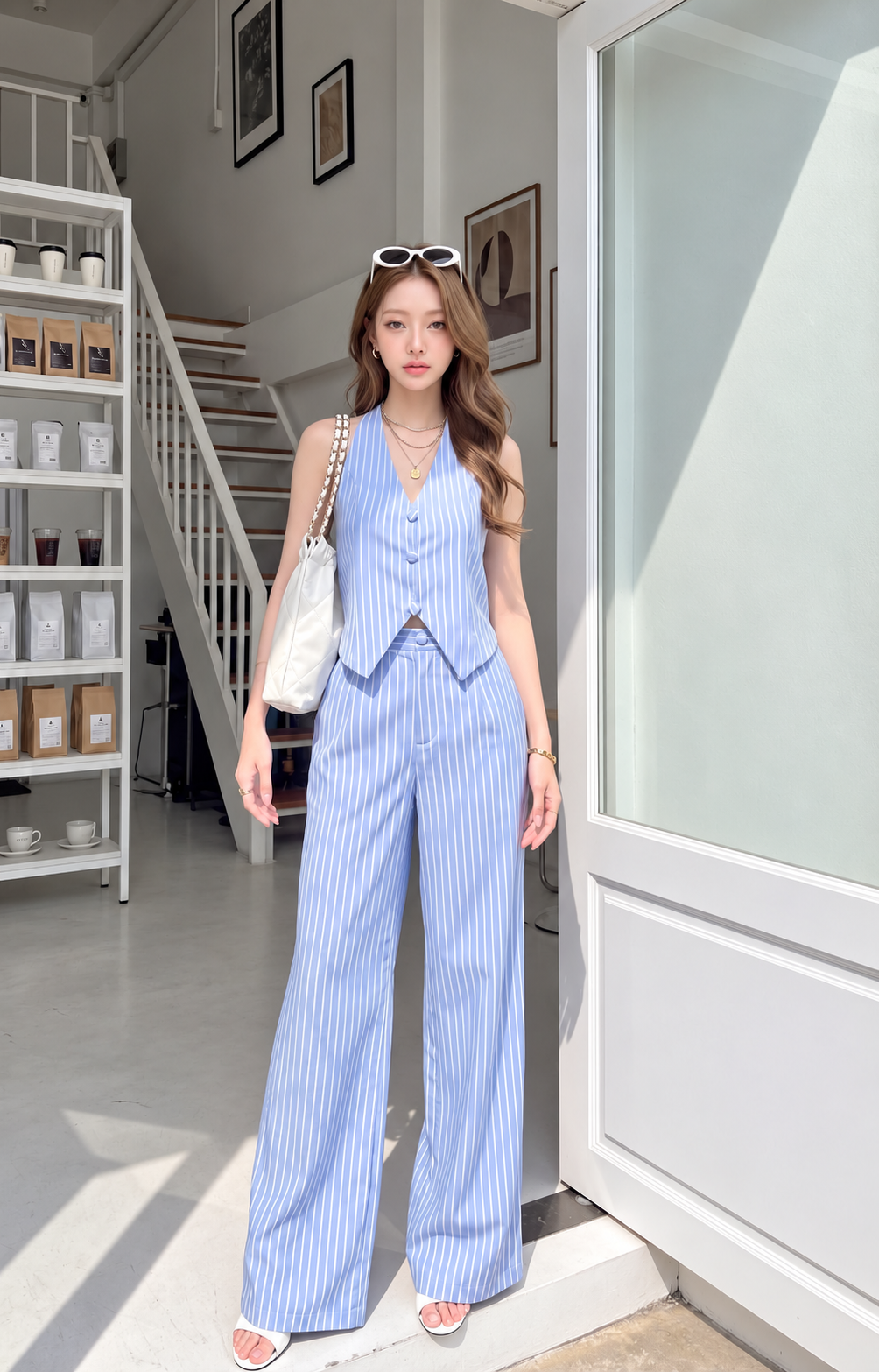
The fastest way to make a co-ord set look work-appropriate is to keep the fit tailored rather than relaxed — a fitted blazer top with a straight-leg trouser reads as a suit, while an oversized shirt-and-shorts version reads as loungewear no matter how you accessorise it. After fit, the two choices that decide the outcome are your footwear and what you carry.
What actually makes a co-ord set read as officewear?
Three things, roughly in order of how much they matter.
Fit. A co-ord works because the eye reads top and bottom as one unbroken line. The moment the top blouses at the waist or the trouser pools over your shoes, that line breaks. Tailored through the shoulder, clean through the hip, hemmed to the right length — that is most of the job done.
Structure. Fabric that holds a shape keeps its outline through a nine-hour day. A very soft knit looks crisp at 9am and slumped by 4pm — the most common reason a co-ord starts feeling too casual by afternoon.
Coverage. A shorts co-ord or a deep neckline can be genuinely stylish and still be wrong for a Monday review meeting. Ankle-length trousers or a midi skirt take almost any set safely into office territory.
Which fabrics hold up through a full Indian workday?
Cotton-blend is the most forgiving choice for daily rotation — it breathes, it machine washes, and the small stretch component helps it hold shape better than pure cotton. Linen blends feel cool but crease visibly by mid-afternoon, so they suit a business-casual office better than a strictly formal one. Crepe and structured suiting blends resist creasing best and suit an air-conditioned floor, though they feel warmer outdoors.
If you are buying for April to June, read the fabric composition before you look at the cut — our guide to the best fabrics for Delhi's summer heat covers what survives the peak months.
How do you dial the same set up or down for your office?
One tailored set covers several dress codes if you change what goes around it — the set stays the same, the formality moves.
| Office setting | How to wear the set | Footwear | Bag |
|---|---|---|---|
| Formal or client-facing | Blazer top buttoned, ankle-length trouser, minimal jewellery | Structured block heel | Structured tote |
| Business-casual | Blazer open over a plain shell top or tee | Loafer or pointed flat | Tote or medium shoulder bag |
| Relaxed or startup | Swap the blazer for the matching shirt, keep the trouser | Clean flat or sneaker | Whatever you already carry |
| Straight to a post-work dinner | Same set, add statement earrings, change shoes | Heeled sandal | Small shoulder bag |
Moving between the two NCR office cultures? The Noida versus Gurgaon dress code comparison is worth reading before you decide how formal to buy.
Does footwear really change how the outfit reads?
More than most people expect. A block heel or a structured flat pulls the whole look toward office, while a sneaker pulls it toward weekend — neither is wrong, but pick on purpose rather than by default.
Hem and shoe shape work together too: an ankle-length trouser looks longer with a pointed shoe than a round, chunky one. And whatever you pick has to survive the commute — a block heel from the footwear edit handles metro stairs and broken pavement far better than a stiletto, as our piece on office wear for the Gurgaon and Noida commute explains.
What should you carry with it?
Layer with a structured tote instead of a crossbody during the week; the tote reads as functional — laptop, files, water bottle — in a way a going-out bag doesn't. A soft bag also collapses in a crowded metro car and drags the silhouette down. Look for something in the bags collection that stands up on its own on the floor.
Which colours and prints survive daily rotation?
Colour matters less than people think. A muted sage or sand set is neutral enough for daily rotation and mixes with almost everything you own. A printed set is better saved for one or two days a week — a strong print gets remembered, which shortens how often you can re-wear it before it starts to feel like a uniform.
Building a work wardrobe from scratch, two tonal sets plus a few plain tops beat four memorable prints. Our capsule wardrobe guide for Indian working women works through that maths.
Can you split the set and wear the pieces separately?
Yes, and you should — this is where a co-ord earns its cost. The trouser goes with a plain white shirt or a fine knit from the tops collection. The blazer top goes over your existing denim, or over a midi dress. One set bought well is realistically four or five outfits, which is why a tailored co-ord set often does more for a work wardrobe than a standalone dress at the same price.
If your office skews more casual, swap the blazer top for the fitted shirt from the same set and keep the trouser. It loosens the formality by exactly one notch without losing the matched-set effect that makes co-ords work in the first place.
What should you check before wearing a new set to work?
Run through this at home, not at 8am on the day:
- Sit down in it for five minutes — does the waistband dig in, does the top ride up?
- Raise both arms overhead. A blazer top that pulls across the back will pull all day.
- Check the trouser length in the shoes you will actually wear, not barefoot.
- Hold the fabric to a window — thin pale fabrics can be sheerer in daylight than under a bulb.
- Read the care label — a dry-clean-only set costs more to keep in rotation than a washable one.
- If the fit isn't right, don't style around it. Exchanges are accepted, and the details are on the returns and exchanges page.
Common Questions
Yes, provided the fit is tailored rather than relaxed and the trouser is ankle-length or full-length. Pair it with a structured block heel or a pointed flat rather than sneakers, and keep the blazer top buttoned. Minimal jewellery and a structured tote finish it off for a client-facing day.