
23 August 2026
Best Fabrics for Delhi's Summer Heat: A Buyer's Guide
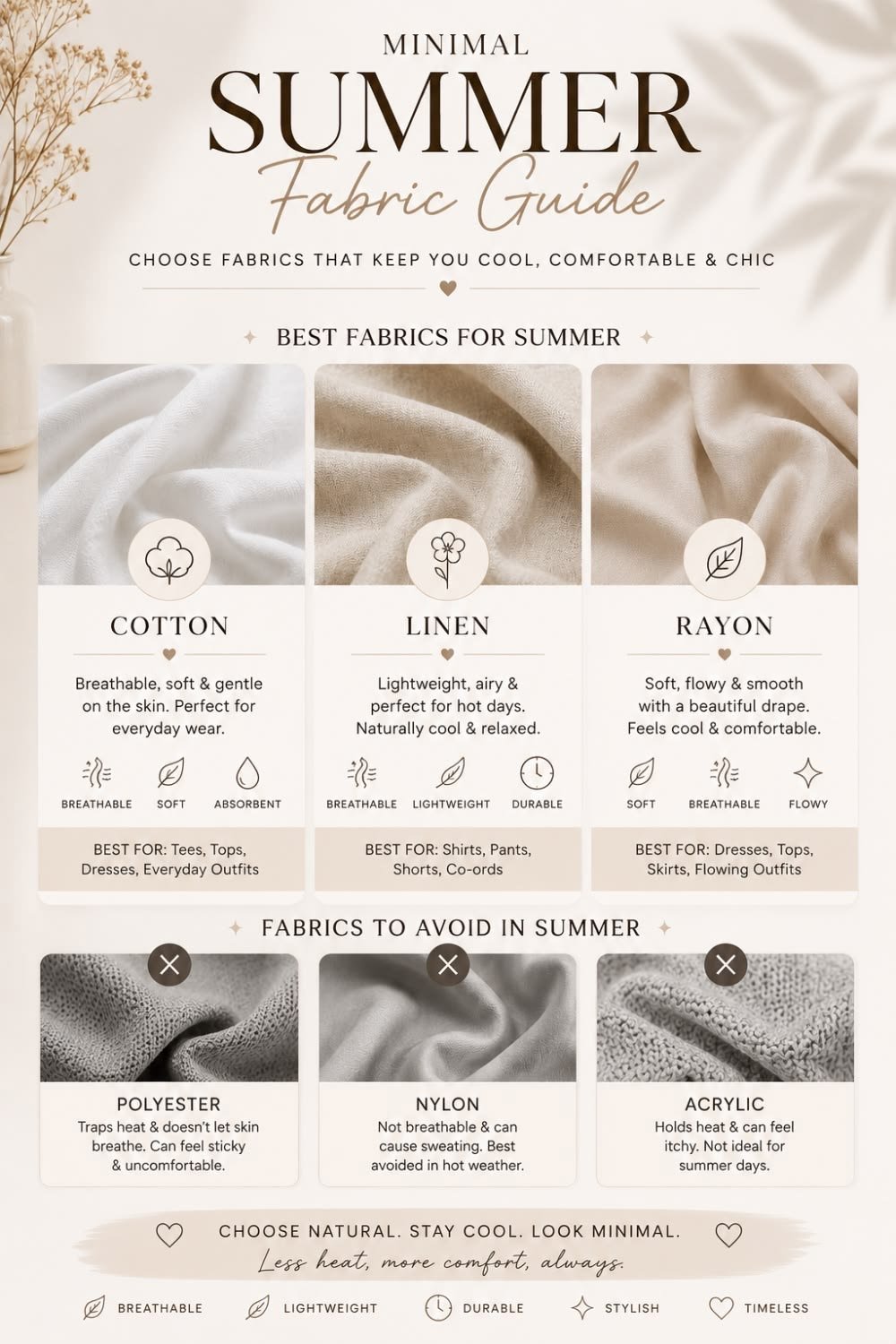
For Delhi's peak summer - roughly April through June - cotton-blends and linen are the two fabrics worth building your daily wardrobe around. Both breathe, both move sweat away from skin, and both wash easily enough to handle being worn twice a week. Satin and heavy polyester blends are better saved for air-conditioned evenings.
Delhi summers routinely cross 40°C, and once that heat settles in, fabric does more for your comfort than the cut or the colour. A beautifully tailored piece in the wrong fibre will feel worse by noon than a looser one in cotton-blend.
What actually makes a fabric feel cooler?
Three things, none of them the word "summer" on a swing tag. The first is air movement: a loosely woven natural fibre lets air pass through, so body heat escapes instead of sitting trapped against your skin. The second is moisture handling - how fast a fabric pulls sweat off skin and lets it evaporate. Linen is one of the best fibres here; it wicks quickly and dries relatively fast, which is why it feels dry again soon after the walk from the cab drop to the office lobby while polyester still feels clammy. The third is drape: fabric that skims rather than clings keeps a thin layer of air against your skin, which is why a relaxed fit beats a tight one in June even in the same fibre.
How do the common summer fabrics compare?
| Fabric | Breathability in heat | Creasing | Shows sweat marks | Best use |
|---|---|---|---|---|
| Cotton-blend with elastane | Very good | Low to moderate | Moderate | Daily wear, office, commute |
| Pure cotton | Very good | Moderate | Moderate | Weekends, home, relaxed days |
| Linen | Excellent, dries fast | High | Low | Relaxed dress codes, travel |
| Rayon / viscose | Good, feels cool to touch | Moderate | Higher | Short outings, occasion wear |
| Georgette | Moderate | Low | Low | Evening functions |
| Satin / heavy polyester | Poor | Low | High | Air-conditioned evenings only |
Is linen worth the creasing?
For most people, yes - with the caveat that still holds: linen creases more visibly through the day than a cotton-blend, so it suits a relaxed or business-casual dress code better than a strictly formal one.
What you get in exchange is real. Linen handles moisture better than dense weaves, dries faster after a sweaty commute, and resists mildew-causing bacteria better - which matters in a city where summer slides straight into monsoon. The guide on linen versus cotton for an Indian summer goes fibre by fibre.
A practical compromise: wear linen on days you're mostly moving, and keep cotton-blend for days full of meetings, where creases across the lap show up most.
Where does rayon fit in a Delhi summer wardrobe?
Rayon feels cool to the touch and drapes beautifully, which makes it a favourite for printed summer dresses and a fine choice for a short outing.
The catch is laundry, not wear. Rayon shrinks more than cotton or linen, and hot water can shrink it significantly - figures around 8-10% are commonly cited, enough to turn a comfortable midi into one that no longer sits right. Wash it cold and dry it flat in shade; the rayon washing method has the full routine.
Which fabrics should you save for evenings?
Satin and heavier polyester blends don't breathe the same way, and in Delhi's heat and humidity they show sweat marks far faster. That doesn't make them bad fabrics - it makes them evening fabrics.
Sheen reads as festive under indoor and string lighting in a way flat cotton doesn't, so a satin top earns its place at a late function. Georgette sits in between: lighter than satin, still better suited to an evening than a 2pm errand run - the georgette washing and ironing guide covers keeping it that way.
Does colour matter as much as fabric?
Less, but it isn't nothing. Lighter colours feel cooler in direct sun yet hide sweat patches less well, so mid-tones and small prints are the practical middle ground for a long day out - and they keep working later in the year, when Delhi's pollution season changes what's worth wearing and pale shades start showing settled dust.
What should you check on a product page before ordering?
- Fabric composition first, cut second. If it isn't listed, treat that as a reason to pause.
- Check whether the piece is lined. A fully lined dress is two layers, which changes how it wears in 40-degree heat.
- Look at the sleeve and neckline. A flutter sleeve moves more air than a fitted full sleeve in the same fabric.
- Read the care instructions. Anything dry-clean-only is a poor daily-summer choice because you'll wear it less.
- Compare the size chart to your own measurements rather than your usual label size - a slightly relaxed fit is genuinely cooler.
- Think about the whole outfit. A breathable dress with stiff shoes is still a hot day.
Browsing by category helps: the summer dresses edit and everyday tops list composition on each product page, and a linen or cotton-blend co-ord set gives you a top half you can take off inside the office AC.
How do you keep summer fabrics looking new?
Wash cool and wash often - summer clothes pick up sweat and city dust faster than any other season's - and dry in shade rather than direct afternoon sun, which fades dyes over a few months.
Storage is where most cotton goes wrong. Cotton stored in sealed plastic yellows in Indian humidity, so use cloth or muslin covers and let air circulate; the guide on stopping cotton clothes from yellowing in storage has the method. Do that and a good cotton-blend dress will still look right next April.
Common Questions
Cotton-blend fabrics - cotton with a small amount of elastane - breathe best for daily wear through Delhi's April to June heat, closely followed by linen. Cotton-blend holds its shape, washes at home, and creases less than pure linen. Linen is the cooler-feeling of the two but shows creases more visibly by evening.