
25 August 2026
How to Dress for Delhi Monsoon Without Ruining Your Outfit
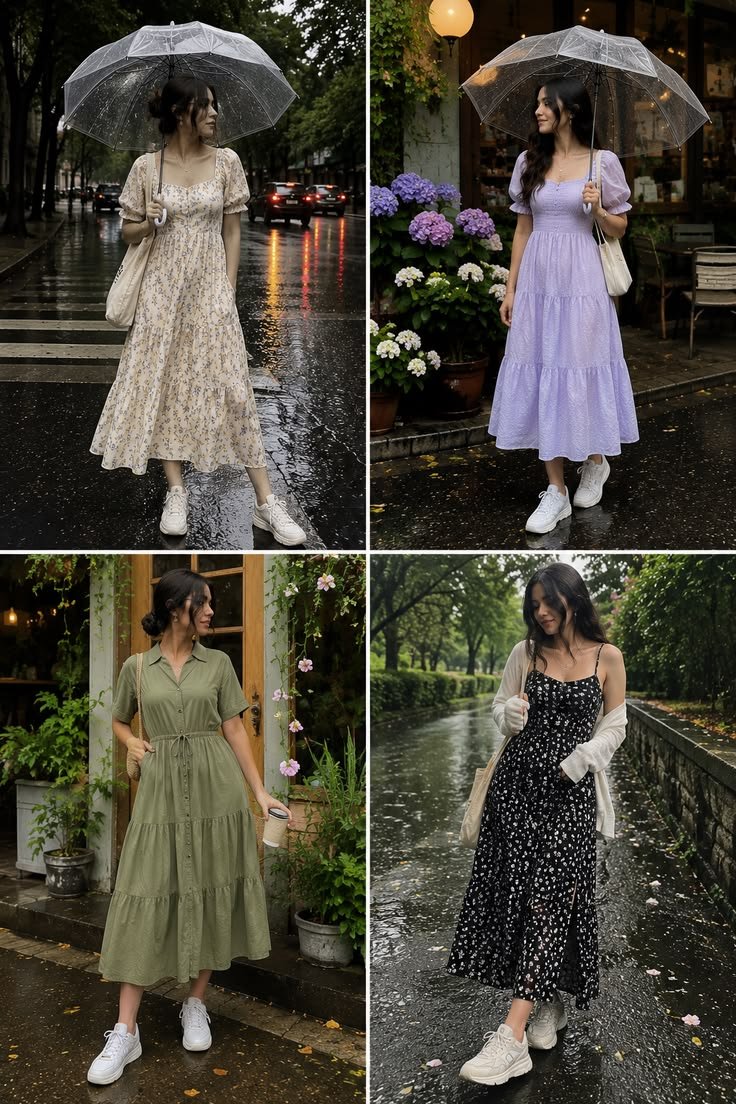
Delhi monsoon dressing comes down to three decisions: a fabric that keeps its shape when damp, a hem that clears the puddles, and footwear that isn't suede or leather. Get those three right and the rain goes back to being weather instead of an outfit problem.
July to September means sudden downpours, waterlogged roads, and the specific misery of arriving somewhere with a wet hem and nowhere to dry it. The season doesn't need a separate wardrobe so much as different priorities within the one you own.
What actually ruins a monsoon outfit?
Rarely the rain itself. It's usually one of four things: fabric that clings once it's damp, a hem that mops up street water, shoes that stain permanently the first time they're soaked, and a bag that lets everything inside get wet. All four are buying decisions more than styling ones.
Which fabrics hold up through a wet Delhi commute?
Cotton-blends with a small amount of elastane hold their shape better when wet than pure cotton, which clings and loses structure the moment it's damp. If you're choosing between two similar dresses for the season, the one with a stretch component in the composition is the safer pick.
Linen deserves a mention people don't expect in monsoon. It wicks quickly, dries relatively fast, and resists mildew-causing bacteria better than dense weaves - three things that matter far more in August than in April. It creases, yes, but a crease dries; a soaked dense weave stays heavy for hours. The linen and cotton comparison covers when each one makes sense.
| Fabric | When it gets wet | Drying speed | Monsoon verdict |
|---|---|---|---|
| Cotton-blend with elastane | Holds shape, minimal clinging | Fast | Best daily choice |
| Linen | Creases but stays breathable | Fast | Good on humid days |
| Pure cotton | Clings, loses structure | Moderate | Fine indoors, risky on a commute |
| Rayon / viscose | Gets heavy and clings | Slow | Save for dry days |
| Georgette | Sheds water reasonably | Fast | Works for evening functions |
| Heavy denim | Soaks through, stays cold | Very slow | Avoid on rainy days |
Rayon is the one to watch. It feels lovely in humidity but drinks water, and it shrinks more than cotton or linen if you then wash it hot - figures around 8-10% are commonly cited. Wash it cold and dry it flat; the rayon washing guide has the details.
Why does hem length matter more in July than in May?
Because the bottom few inches of your outfit meet the street. A full-length maxi drags through puddles and roadside water in a way a midi or knee-length hem simply avoids, and once a hem is dirty you're committed to washing it that night.
This is the one season where a shorter hem is practical rather than a style preference. Ankle-grazing is about the longest worth risking, and midi is the sweet spot. Trousers should clear the shoe rather than break over it - a wide leg that pools at the ankle is the same problem in a different shape.
What footwear actually survives waterlogged NCR streets?
Suede and leather are the two materials to avoid entirely. Both stain permanently from rain and street water, and neither dries in the gap between one commute and the next.
What works is a rubber-soled block heel or a sandal in a synthetic or treated material that wipes clean and dries fast - which matters when you're stepping in and out of autos and covered walkways all day. A block heel also keeps the sole off wet ground better than a flat, while staying stable on broken tiles and sudden curb heights; the case for block heels on Delhi commutes goes into why. Browse the footwear edit with monsoon in mind: closed toe if you want coverage, open and synthetic if you'd rather it dry fast.
What bag should you carry through monsoon?
A structured bag in a coated or synthetic material beats an unlined fabric tote, which soaks through and passes the damp on to whatever is inside it. If you carry a laptop, switching to a zip closure rather than an open top is worth it for three months - the structured bags edit is the place to start.
What belongs in a monsoon commute kit?
- A compact umbrella that lives in your bag, not by the door
- A quick-dry scarf or microfibre cloth to blot a wet hem or arm
- A spare pair of shoes kept at the office
- One zip pouch for electronics and cards
- A hair tie, because humidity does what humidity does
- A light second layer for over-enthusiastic office air conditioning
How do you stop clothes smelling damp?
This is the real monsoon problem in a Delhi flat. Indoor humidity above 80% slows drying and lets bacteria multiply faster, which is exactly the recipe for that stale smell in clothes that felt dry when you folded them.
Three habits fix most of it: dry clothes fully before folding, even if that needs a fan pointed at the rack overnight; never leave wet clothes sitting in the machine; and keep the cupboard loosely packed so air can move. The guide on removing a damp smell from monsoon clothes has the rescue treatment for anything already stale.
What do you wear to a monsoon function or an office day?
For an office day: cotton-blend separates in a mid-tone, a midi hem, and rubber-soled footwear. The rest of that equation is in the Gurgaon and Noida commute guide.
For a wedding or an evening function in August, a georgette or crepe midi dress in a mid-tone or print handles a damp arrival better than pale satin, which shows every water spot. Carry the heels and change at the venue.
Common Questions
Cotton-blend with a small amount of elastane holds its shape better when wet than pure cotton, which clings and loses structure once damp. Linen is the other strong option because it dries relatively fast and resists mildew-causing bacteria better than dense weaves. Avoid rayon and heavy denim on rainy days, since both stay wet for hours.