
12 September 2026
Midi Dress Length Guide: Where the Hem Falls at Your Height
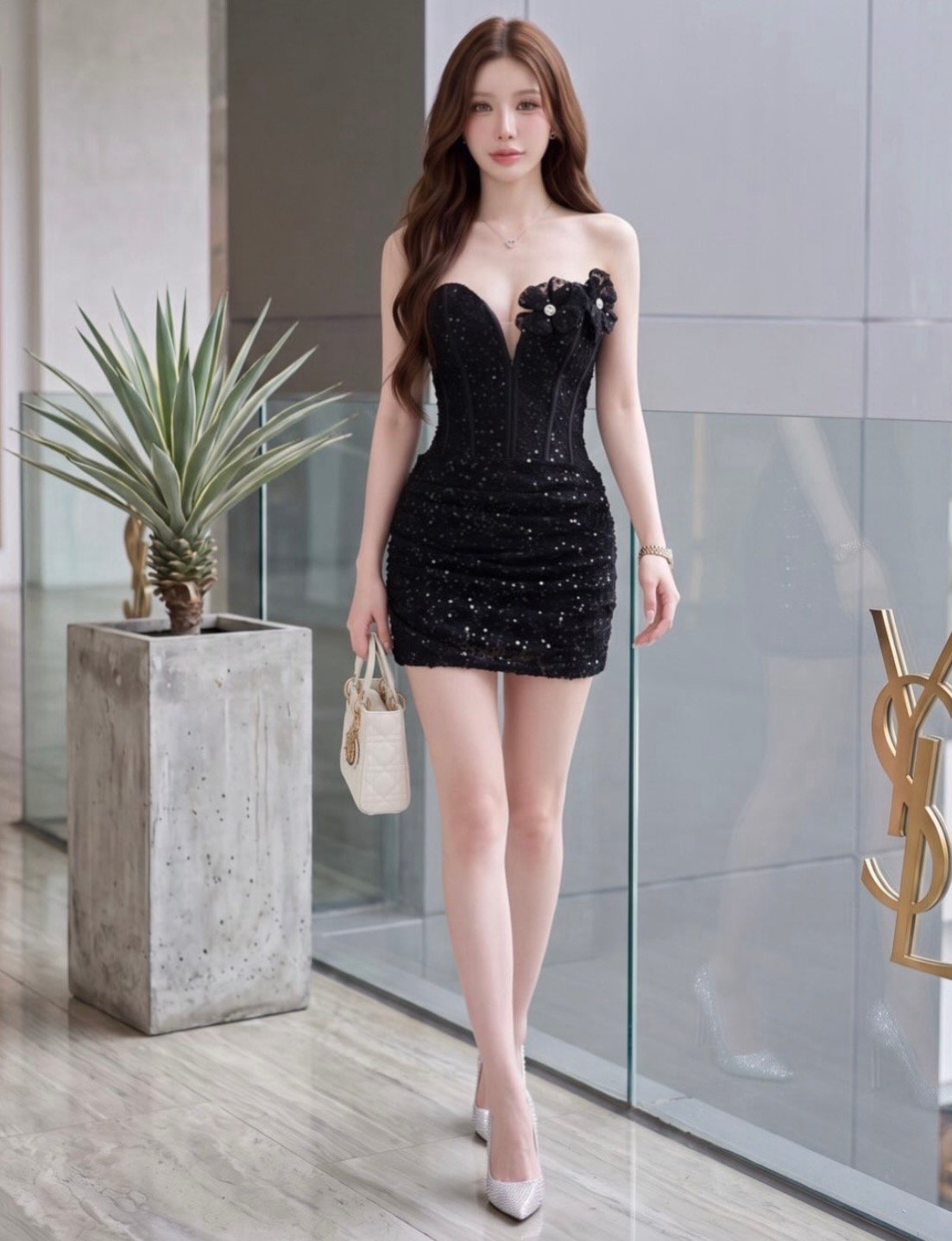
A midi ends somewhere between mid-calf and just above the ankle, but that is a description of where a hem lands on a body, not a fixed measurement. The same dress that sits at mid-calf on someone 5'7" will sit close to the ankle on someone 5'1". The only way to know in advance is to measure from your own shoulder down to the point where you want the hem, and compare that number with the length listed on the product page.
What actually makes a dress a midi?
Length names describe proportion, not centimetres. A mini ends above the knee, a midi ends below the knee and above the ankle, a maxi reaches the floor or nearly. Because the names depend on where the hem lands on you, two women can buy the exact same dress and honestly describe it as two different lengths.
Most dresses sold as midi are cut to land at mid-calf on the fit model the label uses, and fit models usually sit somewhere around 5'5" to 5'7". If you are shorter than that, the hem drops lower on you. If you are taller, it rides higher. Neither is a problem, but you want to know which one is happening before you order rather than after.
Where will a midi hit me at my height?
Use this as a rough map, then confirm against the actual length given on the product page.
| Your height | Where a mid-length hem tends to land | What to watch for |
|---|---|---|
| Under 5'0" | At or just above the ankle bone | The skirt can read very long; look for a raised waist or a slit |
| 5'0" to 5'3" | Low calf, near the ankle | Check the waist seam height as carefully as the hem |
| 5'4" to 5'7" | Mid-calf, as the design intends | The most predictable fit |
| 5'8" to 5'10" | Upper calf, well below the knee | Still reads as a midi, just shorter than the photos suggest |
| 5'11" and above | Just below the knee | May read as a knee-length dress instead |
Where the hem stops matters because it decides how the outfit is divided. A hem that ends at the widest part of your calf creates a horizontal line there; one that ends just below it, near the narrower part above the ankle, lets the leg line run longer. This is about proportion and what you want the outfit to do, not about anything needing correcting. If you like the hem at mid-calf, mid-calf is the right answer.
How do I predict the hem before I order?
- Put on the shoes you actually plan to wear with the dress.
- Stand straight in front of a mirror and mark with a finger exactly where you want the hem to stop.
- Measure from the top of your shoulder, next to your neck, straight down to that point. If you are alone, stand against a wall, mark the spot with a bit of tape and measure the wall.
- Write that number down in centimetres. That is your target length.
- On the product page, find the total length or shoulder-to-hem measurement for the size you are buying. Lengths are often graded, so a larger size can be a little longer.
- Compare the two. Within two or three centimetres of your target, you are fine. More than five centimetres longer and you should plan a hem alteration or choose a different style.
If the page gives length for only one size, ask before assuming every size is identical.
Does heel height change the length I should pick?
Yes, and by more than most people allow for. Every centimetre of heel lifts the hem the same centimetre further off the floor. A midi that grazes your ankle in flats can sit a full inch higher in a block heel, which is often the whole difference between "too long" and "just right".
So decide the shoes first and measure in them. If you want one dress to work both ways, aim for a hem that sits comfortably at mid-calf in flats, because it will still look deliberate once you add height. The guide to choosing footwear for a dress covers which shoe shapes suit which hemline, and it is worth browsing the footwear collection alongside whatever dress you are considering rather than afterwards.
What about the waist seam, not just the hem?
The waist seam moves with your height too, and it is the measurement people forget. On a shorter torso, the waist seam of a fitted midi can sit above your natural waist, under the ribs. On a longer torso it can sit low, so the skirt looks like it begins at the hip.
Before ordering a waist-seamed midi, measure from your shoulder to your natural waist and check it against the product page if that figure is listed. If it is not, prefer styles that are relaxed about where the waist falls: tie waists, elasticated waists, wrap fronts, A-line and shift cuts all move with you instead of fixing a line at one height.
Which midi length works for office and which for evening?
For work, a hem at or below mid-calf stays where you put it when you sit at a desk, climb metro stairs or get in and out of a cab, which matters on a Delhi commute. A straight or gently A-line midi in a fabric that does not crease badly is the safest office choice, and it survives a full day of air conditioning and traffic.
For evening, a longer hem closer to the ankle, or a fluid fabric with movement, reads more dressed up. If you will be standing through a long function, keep the hem clear of the floor so you are not holding it up all night.
Fabric matters as much as length in this city. Our post on styling a midi dress for Delhi weather covers what actually copes with the heat, the humidity and the dust.
What if the dress turns out longer than I want?
Shortening a straight or A-line hem is a quick, inexpensive alteration and almost always worth it. Tiered, pleated, bias-cut and embellished hems are harder, because shortening them changes the proportion of the entire skirt, so ask your tailor before you commit.
Best of all, do the arithmetic before you order. Start with your three body measurements, using the measuring guide if you are working alone, check the size chart and the listed length on the product page, then browse the dresses collection knowing exactly what you are looking for.
Common Questions
A midi ends below the knee and above the ankle, usually somewhere around mid-calf. That is a description of where it lands on a body rather than a fixed measurement, so the same dress can sit at mid-calf on one person and near the ankle on someone shorter. To know in advance, compare the length listed on the product page with your own shoulder-to-hem target.