2 October 2026
Best Dress Styles if You Carry Weight Around the Middle
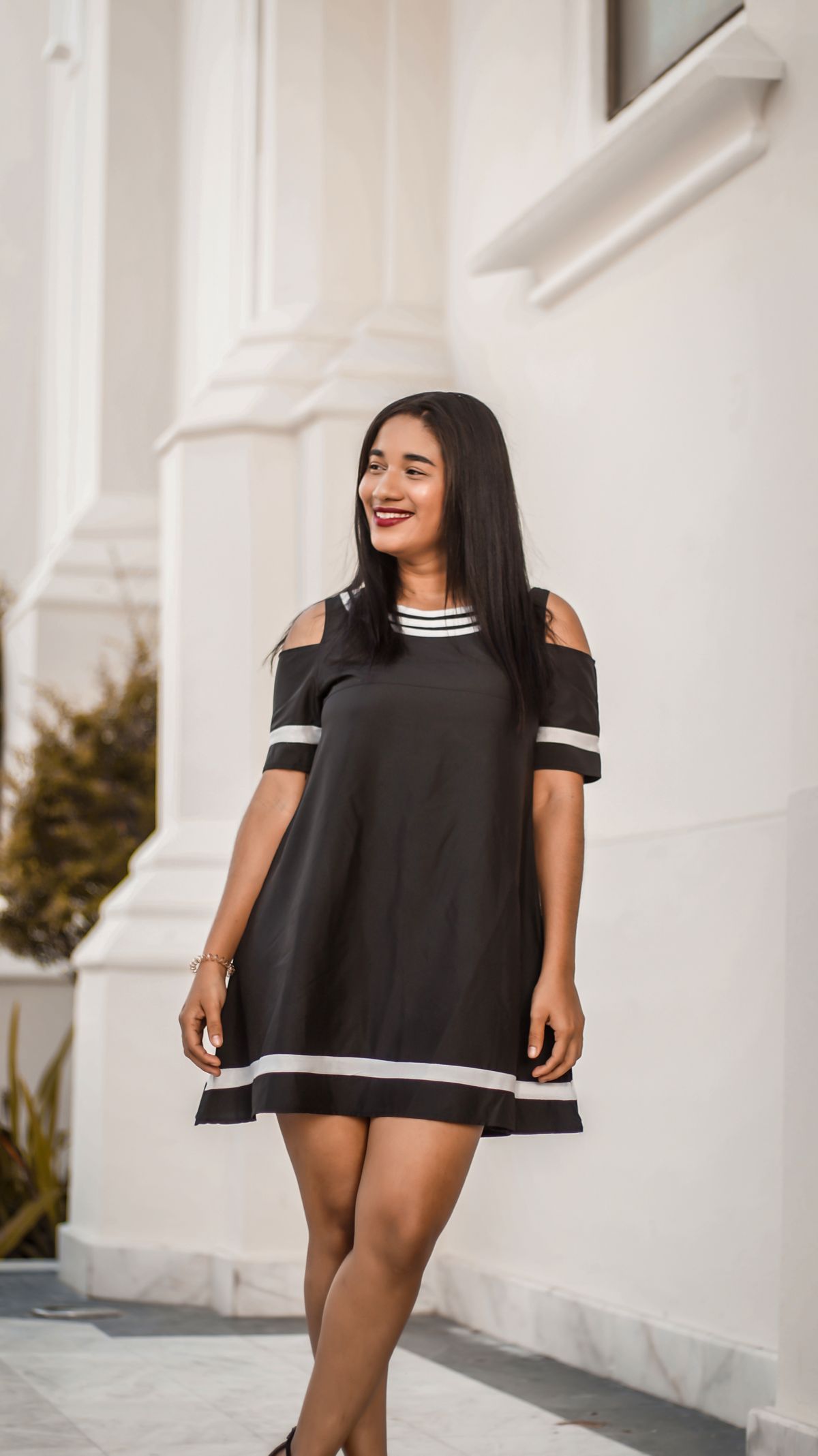
If your waist measurement is close to or larger than your bust and hip, and you carry weight around the middle, the dresses that work are the ones that skim the midsection and create a long vertical line. The ones that fail are the ones with a tight seam at the natural waist, because that is the one place a seam has nothing to hold on to.
What an apple shape actually means
Your shoulders and hips are reasonably balanced, your waist is not clearly defined, and most weight sits between the bust and the hip. Legs are often the slimmest part, which is useful information when you are choosing hemlines.
Measure bust, waist and hip as above. If the waist is within a few centimetres of the other two, stop looking for dresses that nip in at the waist. They will pull, and a pulling seam is far more noticeable than a loose one.
The shapes that work
Empire waist. The seam sits directly under the bust, where you do have definition, and the fabric falls from there. This is the single most useful shape for an apple and worth knowing by name when you shop.
Shift and A-line. No waist seam at all, or a very soft one. The dress hangs from the shoulders and skims past the middle.
Wrap, tied loosely. A wrap gives you a diagonal line across the body, which is more flattering than a horizontal one. Tie it at the narrowest point you have, even if that is higher than a conventional waist.
Column with an open layer. A straight dress under an unbuttoned shirt, long jacket or open kurta creates two vertical lines down the front. This is an unglamorous trick that works extremely well.
The shapes that fight you
- Fitted waist seams, which pull horizontally and announce the thing you were hoping to skim
- Thin clingy jersey, for the same reason it fails everyone: it reports rather than skims
- Peplum tops that flare at the waist, which add volume at the widest point
- Very full gathered skirts starting at the natural waist, which do the same
Use your legs and your neckline
This is the practical core of dressing an apple shape: draw attention to the parts that are already slim.
Hemlines. If your legs are good — and for most apple shapes they are — a hem just above or just below the knee is a genuine asset. There is no reason to default to maxi.
Necklines. A V-neck, scoop or open collar creates a vertical line and a bit of open skin at the chest, both of which lengthen the upper body. A high round neck does the opposite and makes the torso read as one solid block.
Sleeves. Three-quarter sleeves end at a narrow point of the arm and keep the silhouette tidy. Very tight short sleeves that end mid-bicep tend to cut the arm at its widest.
Fabric and structure
Apple shapes benefit from fabric with a bit of weight and body. Something that holds a shape of its own will hang from the bust and create a clean line past the middle. Something thin will take the shape of whatever is underneath.
Good: crepe, ponte, cotton with a little structure, lined georgette, linen blends.
Difficult: single-layer jersey, thin satin, anything clingy and shiny.
A lined dress is almost always better than an unlined one here. The lining creates a small gap between fabric and body, and that gap is what makes a dress skim instead of cling.
Shapewear, honestly
It works, but it is not a substitute for the right shape. A fitted dress plus shapewear is still a fitted dress, and the seam that was pulling will still pull. Use shapewear to smooth a line under a dress that already fits, not to force a dress that does not.
If you do wear it, high-waisted shorts in a breathable knit are more comfortable through a full day than a full-body piece, particularly in Indian heat.
Buying online
Look for the words "lined", "empire", "A-line", "shift" and "wrap" in descriptions. Look at the side-view photo if there is one — it tells you more about how a dress hangs than the front view. And read the fabric composition: a high elastane percentage usually means cling.
Our dresses and tops list fabric and fit on every product page. Exchanges are open for 7 days if the fit is not right.
The short version
Release the waist, create a vertical line, show the legs and the neck, and choose fabric with enough body to hang rather than cling.
Common Questions
Not hide — release. There is a difference between a dress that skims the midsection and one that drapes shapelessly. A completely unfitted sack adds width. What works is a dress with definition somewhere, usually under the bust, and a clean fall from there.